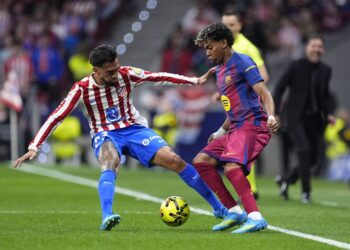

When Pedri González arrived at Barcelona, he did so quietly. The teenager would show up to training in a taxi, hidden behind a mask, unnoticed among the noise of a world still adjusting to the pandemic. He was only 17, too young to drive, a name unknown to most of the squad, and to some, just another prospect in a long list of hopes for the future.
Inside the club, there was even talk of sending him out on loan. Ronald Koeman, then head coach, admitted he barely knew him. “One day he told me he hadn’t seen me play much and that I would have to prove myself in training,” Pedri once recalled. “That gave me motivation. I knew I had to work as hard as anyone to earn my place.”
Koeman did not need long to change his mind. Like so many before him, he realized that Pedri’s modest frame and gentle demeanor hid something extraordinary. The first touch, the awareness, the calmness under pressure all evoked memories of Andrés Iniesta’s early days. He looked too fragile for the stage, but the moment the ball touched his feet, everything made sense.
When Messi Found His Reflection
Pedri joined Barcelona at a time when Lionel Messi, captain and living legend, was unknowingly approaching the final chapter of his era at the Camp Nou. The team was in transition, and few expected that the bond between the world’s greatest player and a teenager from the Canary Islands would blossom so quickly.
Their connection was immediate. Messi, who rarely praised young players early on, recognized the talent right away. “After the second training session, Leo asked, ‘Where did this kid come from? If he keeps this level, he will be one of the best in the world soon,’” recalled former sporting director Ramon Planes.
Barcelona had just one full season to enjoy them together in 2020 and 2021. Only one year and 47 official matches side by side, but it was enough to suggest what might have been. That single season carried the promise of an era that never had the time to unfold.
The Year of Understanding
During that campaign, Messi scored 38 goals and provided 12 assists in 47 appearances. Pedri, meanwhile, contributed 4 goals and 5 assists across 52 matches. Their understanding went beyond statistics. The pair moved in harmony, playing like musicians who could anticipate each other’s notes.
By January 2021, that chemistry had turned into one of the team’s few constants. In the 2–3 win against Athletic Club in San Mamés, Pedri provided a beautiful assist for Messi’s goal, threading a pass through defenders with a clarity that belied his age. It was the purest example of their connection, vision meeting genius, youth meeting mastery.
Even earlier, the numbers already reflected their synchronicity. Against Real Sociedad, Messi received 10 passes from Pedri and returned 9 to him. By December that year, the Argentine had received 47 passes from the young midfielder and given 46 back. Those exchanges were more than technical; they represented the birth of mutual trust.
Koeman saw it clearly from the touchline. “Pedri plays best between the lines,” he explained. “His connection with Leo and the others is very good.” For a team struggling to rediscover its identity, that link became a reminder of what Barcelona football looked like at its best.
The Short Story of a Lost Era
For Pedri, that season was a dream wrapped in disbelief. “He is the best in history,” he once said. “Sometimes I would ask myself, what am I doing here playing next to him?”
He later described what every teammate of Messi has said in their own words: that playing with him was easy because the difficult part was already done. “When you give him the ball,” Pedri explained, “you know something is going to happen.”
It was a partnership that mixed reverence and rhythm. Messi guided, Pedri listened, and together they brought back flashes of the artistry that had defined Barcelona for a generation. Their passes were conversations. Their movement was understanding without words.
And then, too soon, it ended. Financial collapse forced the club into decisions that changed everything. Messi left for Paris in the summer of 2021, and what could have become a defining duo turned into a beautiful memory.
A Legacy of What Could Have Been
Their time together lasted only one season, yet its emotional weight remains. In those 47 games, Barcelona saw the bridge between eras, the farewell of one genius and the arrival of another. Messi’s mastery met Pedri’s promise, and for a few months, it felt as though time itself had paused to let them coexist.
Pedri has since become a leader in his own right, carrying forward the same creativity, calmness, and intuition that once connected him to Messi. The echoes of that partnership still live in the way he plays, in every disguised pass and patient pause that recalls the lessons of his mentor.
Their story was short, but it was enough to remind Barcelona fans of what football at its most human level can feel like: two generations speaking the same language, one teaching, the other learning, both understanding that their shared moments were precious because they were fleeting.
Bottom line
Messi and Pedri shared only a single season together, but it was a season that carried the poetry of generations colliding. Their connection was a glimpse of continuity between past and future, between genius and growth. It ended too soon, but its memory still defines what Barcelona stands for: beauty in understanding and greatness shared across time.

Discover more from Barça Buzz
Subscribe to get the latest posts sent to your email.