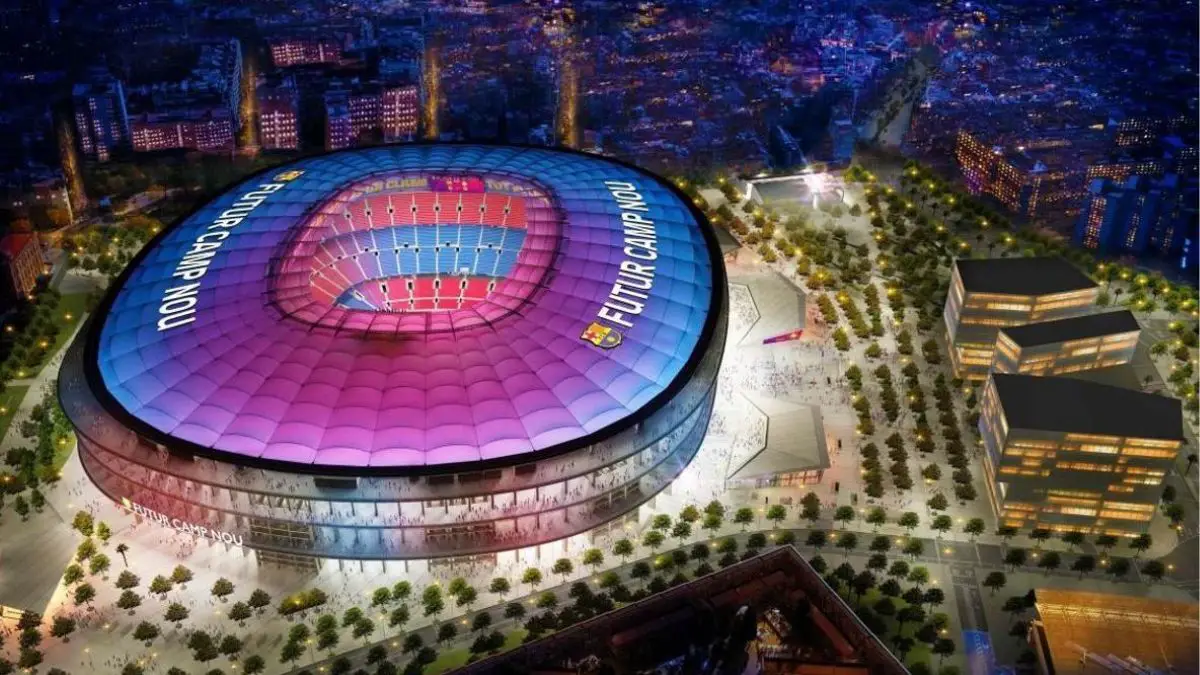
The redevelopment of Spotify Camp Nou is beginning to generate real optimism inside Barcelona. Recent internal assessments suggest the schedule is being respected, and in some areas the work may even be advancing slightly better than expected.
The feeling at the club is that the project is moving in the right direction, especially in some of the most demanding parts of the build. But there is also one crucial phase ahead that will force Barcelona to make an important decision.
And that decision will have a direct impact on the start of the 2027-28 season.
Progress is being made in the most complex areas
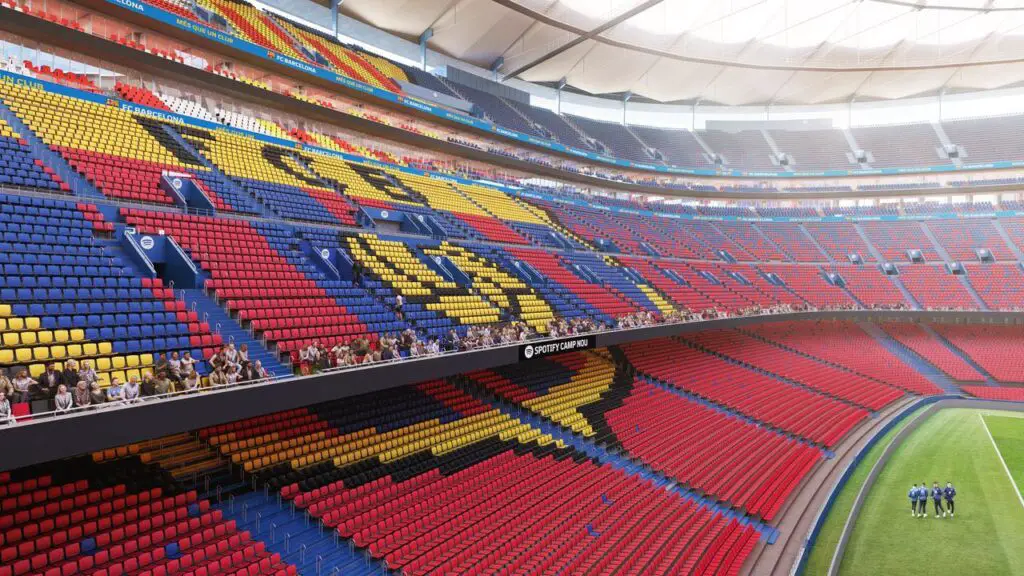
Right now, some of the most sensitive work is taking place inside the stadium itself. Electrical systems, hospitality areas, catering spaces and premium sections are all in active development as the club pushes through one of the hardest stages of the project.
There is also significant focus on the VIP boxes, which are considered essential to Barça’s long-term financial plan. These premium areas are expected to play a central role in boosting matchday income once the new stadium is fully operational.
Despite the technical difficulty of this stage, the overall pace remains positive. That progress is one of the main reasons why confidence inside the club has grown in recent weeks.
Capacity will increase again from 2026
The next major step is expected to arrive once this season comes to an end. At that point, attention will shift to the installation of seating in the third tier, a decisive moment in the wider redevelopment.
If everything continues on schedule, the side section of that stand could open by late September 2026. That would take the stadium to an estimated capacity of around 70,000 spectators.
And that would only be the beginning of the next jump. By the end of 2026, once the VIP seating areas are also in use, the projected capacity could rise again to around 80,000.
A near-complete Camp Nou in 2027
Once the main structural ring is finished, the focus will move to the ends of the stadium. That part of the project is expected to continue until around April 2027.
That period could become a turning point. Barcelona would then be close to having a stadium capable of operating at an almost full level, which would allow the club to begin maximising matchday revenue again.
For Barça, that is not just a construction milestone. It is also a key step in the club’s broader financial recovery.
The roof will create the biggest disruption
The most difficult moment is expected to arrive with the installation of the roof structure. That phase is projected to last around four months and would require all activity inside the stadium to stop completely.
In principle, that work could have started in May 2027. But because the team are still expected to be competing at that stage, the club are planning to delay it until the summer instead.
That choice solves one problem, but creates another.
Barcelona will have to move out temporarily
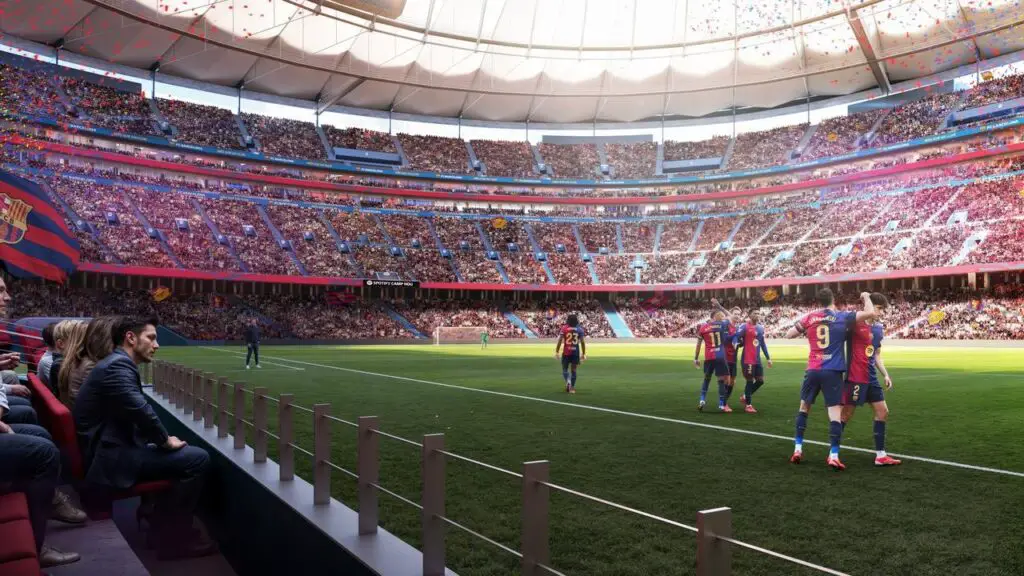
During those months, Barça will not be able to play at Camp Nou. As a result, the club are already assuming they will need to find an alternative stadium for the opening matches of the 2027-28 campaign.
It would only be a temporary relocation, but it now looks increasingly unavoidable. The final stretch of the rebuild is progressing well, yet the most disruptive phase will still demand a sacrifice.
The new Camp Nou is taking shape, but the last major step will force Barcelona to leave home for a while.

Discover more from Barça Buzz
Subscribe to get the latest posts sent to your email.