
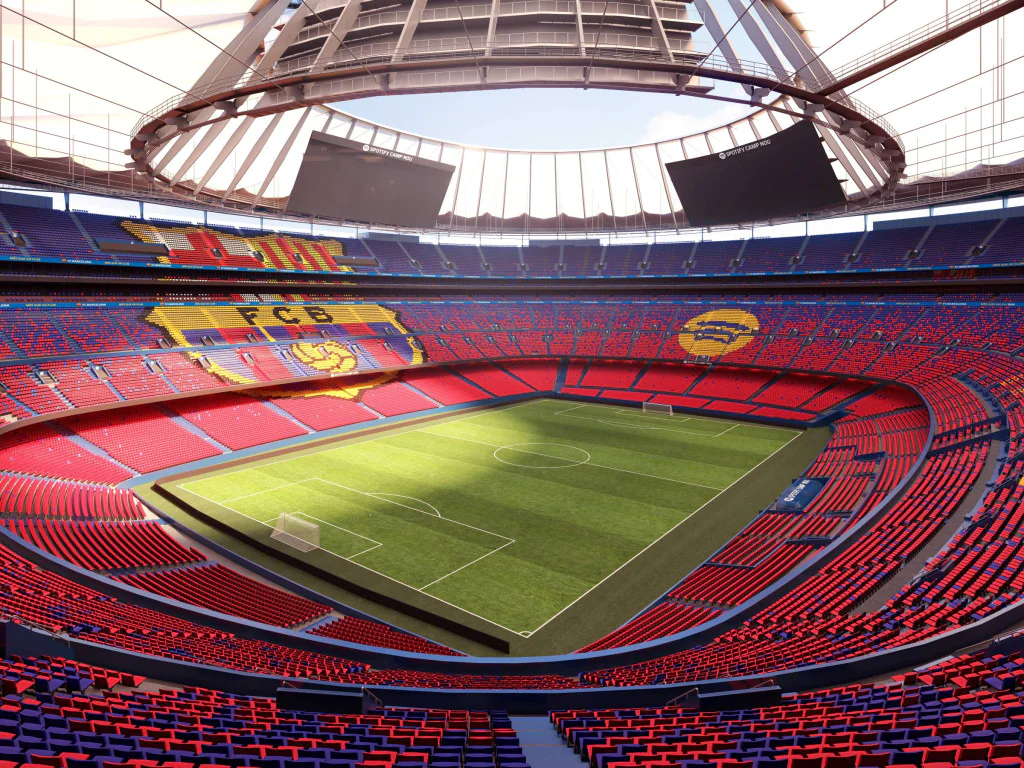
FC Barcelona is on the verge of completing one of the most ambitious transformations in its history with the new Spotify Camp Nou. The project not only modernizes the stadium but also redefines the concept of a sports venue in Europe, combining capacity, technology, sustainability, and year-round social and commercial exploitation.
A bigger and better stadium
One of the most visible changes will be the increase in capacity. The new Camp Nou will hold nearly 105,000 spectators, making it the largest stadium in Europe. This expansion will be complemented by a thorough reorganization of the premium spaces, including triple the number of VIP boxes and double the parking spaces, two key factors for increasing the club’s structural revenue.
A stadium designed for seven days a week
The renovation extends beyond the stadium’s interior. The area surrounding the stadium will become a vast commercial and social plaza, featuring nine satellite buildings that will house stores, dining options, offices, and cultural spaces.
A major highlight will be the new Barça Store and the Barça Immersive Museum, designed to provide an interactive experience for fans and tourists, even on days when there is no match.
Next-generation architecture
From a structural standpoint, the stadium is being designed almost from scratch. The new integral roof will cover the entire venue and feature three giant 360º screens, visible from every seat.
This new roof will not only improve visibility and acoustics but also protect fans from the elements.
The façade will be covered by ceramic louvre panels, adding visual identity, thermal insulation, and energy efficiency. Unlike the original Camp Nou built in 1957, the new structure will not rely on the original skeleton, ensuring greater safety and flexibility for future adaptations.
Sustainability at the core of the project
The new Spotify Camp Nou aims to become one of the most sustainable stadiums in the world. The roof will incorporate 18,000 square meters of solar panels, capable of generating a significant portion of the stadium’s required energy.
Additionally, the cooling system will utilize geothermal energy, reducing external energy consumption by up to 30%. Passive ventilation systems and rainwater collection tanks will also be installed, helping reduce water usage by about 20%. The environmental commitment is further strengthened by the recycling of nearly 90% of materials from the old stadium.
A stadium for the future
The area surrounding the stadium will be entirely pedestrianized, with 25 hectares of green space designed to create a more pleasant microclimate and reduce acoustic impact in the neighborhood.
The entire project is being managed using BIM methodology, ensuring maximum precision in controlling costs, timelines, and execution.
The new Spotify Camp Nou is not just a renovation; it’s a shift into a new era. A stadium prepared for the future of football and to sustain the economic and social growth of Barça for decades to come.

Discover more from Barça Buzz
Subscribe to get the latest posts sent to your email.