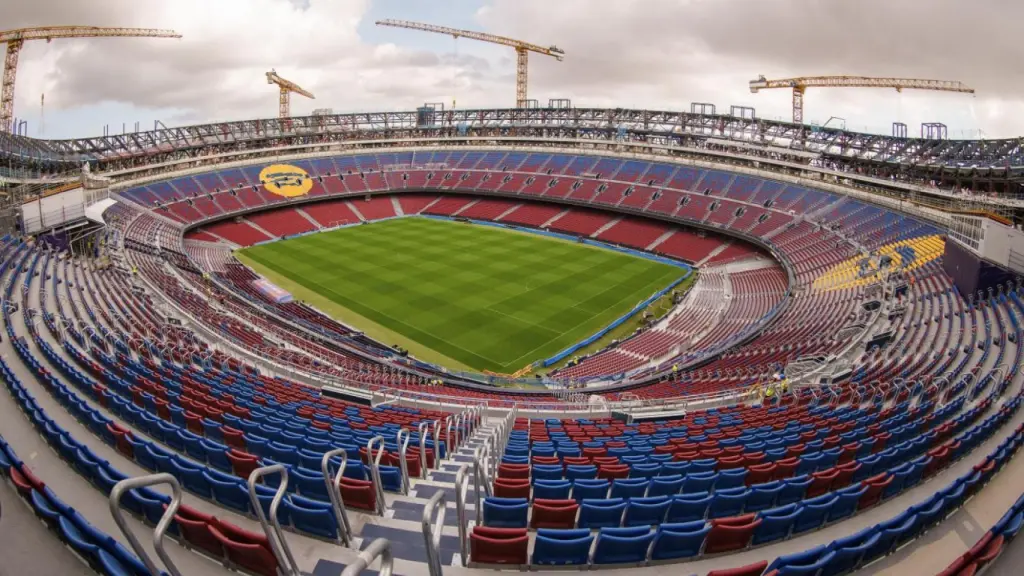
Spotify Camp Nou is slowly filling up again, but not everything about this new stage has been welcomed positively. In the areas behind the goals, complaints have started to emerge from members and supporters over a very visible problem during matches: from several rows in the lower tier, it is difficult to see the goal directly in front of them properly. The issue is said to affect the lower seats in Gol Nord and Gol Sud, and it has reopened a very sensitive debate around the renovation. The complaint itself comes from a recent Mundo Deportivo column by Xavier Bosch, so it should be treated as a published criticism, not as an officially confirmed defect acknowledged by the club.
The criticism is serious because it touches one of the most basic features of any stadium: visibility. According to that published complaint, the relatively low slope of the first tier, together with the presence of the static advertising strip near the pitch, makes it difficult to see the goal line correctly from some seats. In the most affected rows, the article claims that supporters can even lose sight of part of the goalmouth.
That creates exactly the kind of frustration fans hate most: not clearly seeing a low shot, a close-range finish or an action near the post. And when flags from the animation section are added in front, the feeling only gets worse. At that point, the problem stops feeling cosmetic and becomes a question of whether people are paying for a match experience that is clearly limited in one of the most emotionally important parts of the stadium. That last point is an inference from the nature of the complaint.
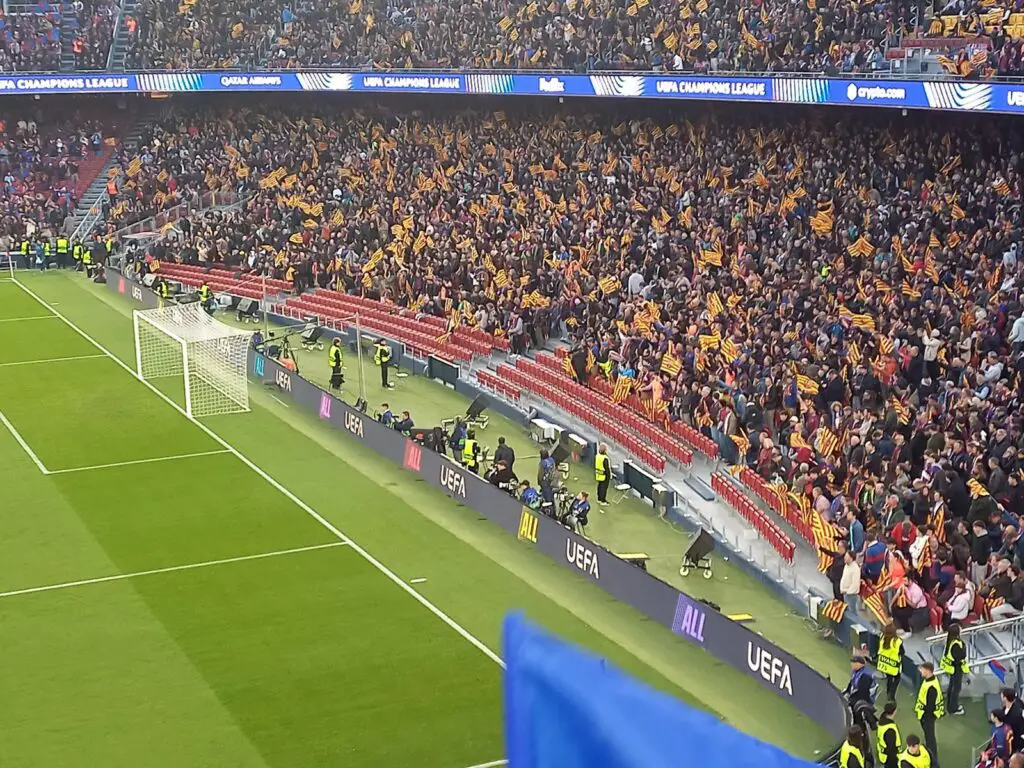
The timing makes the criticism even more uncomfortable
The issue arrives just as Barça are increasing the stadium capacity again. Last week, Barcelona received the new licence to open Gol Nord, which raised the available capacity to 62,652 spectators, while reporting from other outlets described the authorisation in round terms as roughly 62,000. The key point is the same in both cases: many more people are now entering the stadium, so any visibility problem in those sections could become much more noticeable.
That is what makes the complaint politically and institutionally awkward. Barça are presenting the progressive reopening as a major success, both financially and symbolically. More seats mean more ticket income, more atmosphere and a bigger sense that the club is returning home properly. But if a visible section of the crowd feels the view is compromised, part of that positive narrative starts to weaken. That conclusion is an inference, but it is strongly grounded in the reopening context and the nature of the complaint.
The most delicate part: the criticism says this was already known
The most sensitive element in the whole debate is that the criticism does not describe the problem as a total surprise. Xavier Bosch’s column argues that the original winning concept linked to Nikken Sekkei included improvements aimed at visibility in that area, but that later reformulations of the project left the lower slope of the first tier largely intact. I could verify that Nikken Sekkei, b720 and IDOM are indeed the firms behind the project, but I did not find a recent public technical document from the club confirming that this exact visibility correction was removed in the final redesign. So that specific point should remain framed as the columnist’s claim, not as an independently confirmed fact.
What is verifiable is that the architectural messaging around the project has consistently promised a better spectator experience. IDOM describes the redevelopment as an improvement in comfort, accessibility and safety, while the broader project presentation emphasises a transformed stadium experience. That is exactly why complaints about not seeing the goal properly hit such a nerve: they cut straight against one of the most basic expectations attached to a stadium overhaul of this scale.
So the situation today is quite clear. The complaint is real, visible and already circulating among supporters, especially in the goal-end sections. What is not yet clear is whether Barça will respond with technical adjustments, seat reviews or any specific mitigation for the affected rows. But one uncomfortable shadow has already appeared over the new Camp Nou: for some fans, the feeling is simple — they may be paying more while seeing less.

Discover more from Barça Buzz
Subscribe to get the latest posts sent to your email.