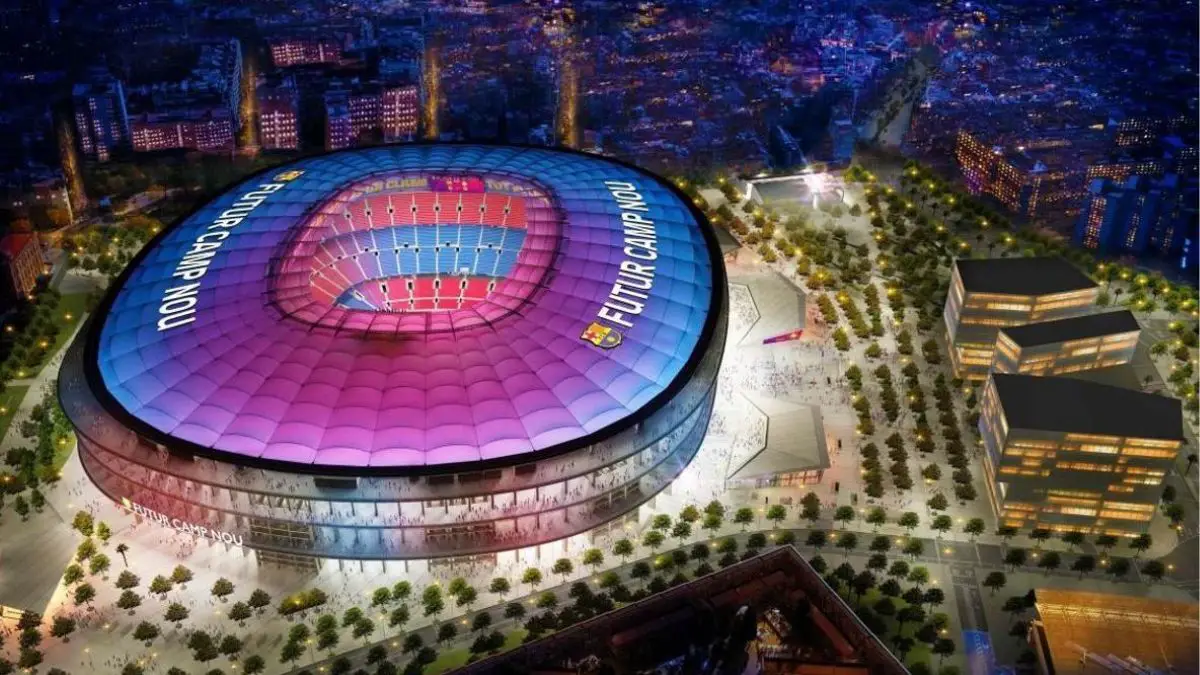
Joan Laporta has once again placed the spotlight on one of Barça’s biggest bets for the coming years: the new Spotify Camp Nou. As he begins his new presidential term, the Barcelona chief continues to insist that a huge part of the club’s future depends on the commercial power of the renovated stadium. This time, he has done so with a very specific figure that has dramatically raised expectations around Barça’s financial future. FC Barcelona officially said on 24 February that the club had increased its stadium revenue forecast to €350 million, driven largely by the latest hospitality products.
According to the figures now being pushed by Laporta’s project, the new stadium could generate around €350 million in additional revenue, while even a more conservative scenario would still place the increase at a very significant level. That number matters because it links directly to the economic message Laporta has defended throughout the campaign and after his re-election, with the stadium presented as one of the pillars of Barça’s medium-term recovery.
Inside the club, the renovated Camp Nou is not being treated as a symbolic project alone. Barcelona want the stadium to become a structural engine of revenue, not just a venue for football matches. The plan is to transform it into a far more powerful commercial asset through hospitality, premium seating, year-round exploitation and a broader matchday experience model.
In fact, the club has already revised its estimates upward. Barça’s official communication and multiple Spanish reports in late February said the fully renewed stadium could lift exploitation-related revenue by roughly €350 million, a figure the club views as crucial in the broader economic framework surrounding Espai Barça and the financing attached to it.
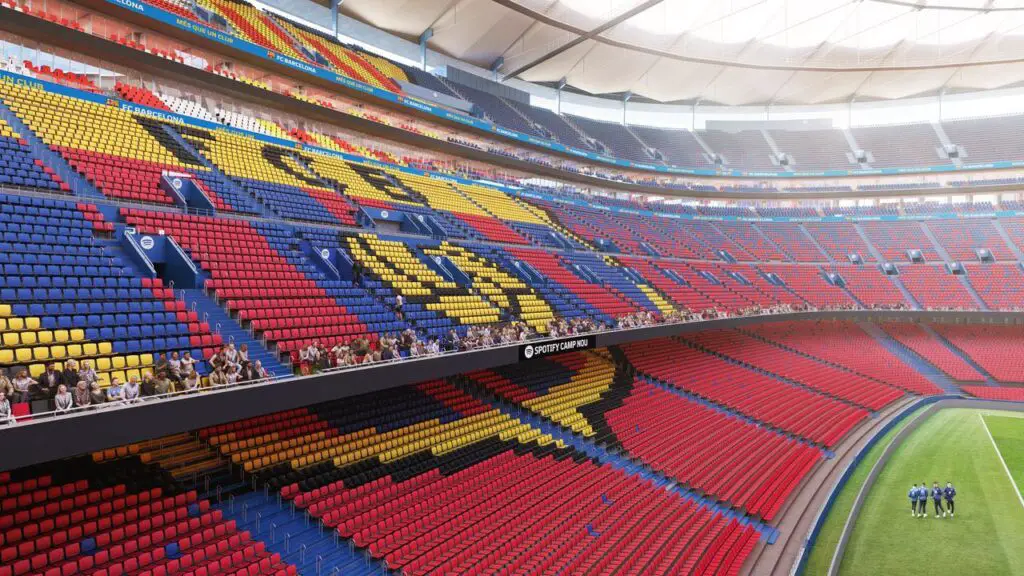
The real financial engine is VIP hospitality and premium exploitation
A decisive part of that projected jump comes from the stadium’s new commercial strategy. Barcelona have built a different VIP and hospitality model, based on long-term licences and premium experiences designed to attract both companies and high-spending clients. The club says the product is intended to place the new stadium at the forefront of the hospitality and experience sector.
That new structure is central to Barça’s logic. The aim is to secure more predictable revenue streams, raise the value of hospitality packages and multiply the stadium’s commercial performance well beyond the old model. Club-backed reporting in February said more than 3,700 VIP seats had already been sold and that the revised forecast linked to the new hospitality model was already above €335 million, later rounded publicly to €350 million.
Laporta had already hinted at this vision during the election debate, where the stadium was presented as one of the central drivers of Barça’s next economic leap. Recent campaign reporting also framed Spotify Camp Nou revenue at roughly €350 million to €400 million within Laporta’s wider projections for the club’s next cycle.
Barça are already starting to see real signs of change
While the final phases of the project are still pending, the club is already taking visible steps toward a broader reopening. Barcelona recently received licence 1C, allowing the activation of the Gol Nord area and increasing the available stadium capacity from roughly 45,401 spectators to just over 62,600. Different reports list the new capacity as 62,652 or 62,657, depending on the source, but all point to the same substantial jump.
That increase in capacity does not yet represent the finished stadium, but it does reinforce the club’s wider message about the impact the fully operational Spotify Camp Nou could have. Barça also announced the start of the process to issue 14,000 new season tickets in the newly enabled area, a move that underlines how the club are already monetising the expansion step by step.
That is why the €350 million figure carries so much weight in Laporta’s discourse. It is not just a campaign slogan or a dramatic soundbite. For Barcelona, it is the economic foundation on which they hope to build future stability, improve investment capacity and return to competing with Europe’s elite from a much stronger financial position.

Discover more from Barça Buzz
Subscribe to get the latest posts sent to your email.