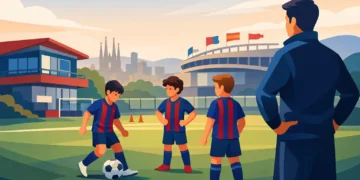
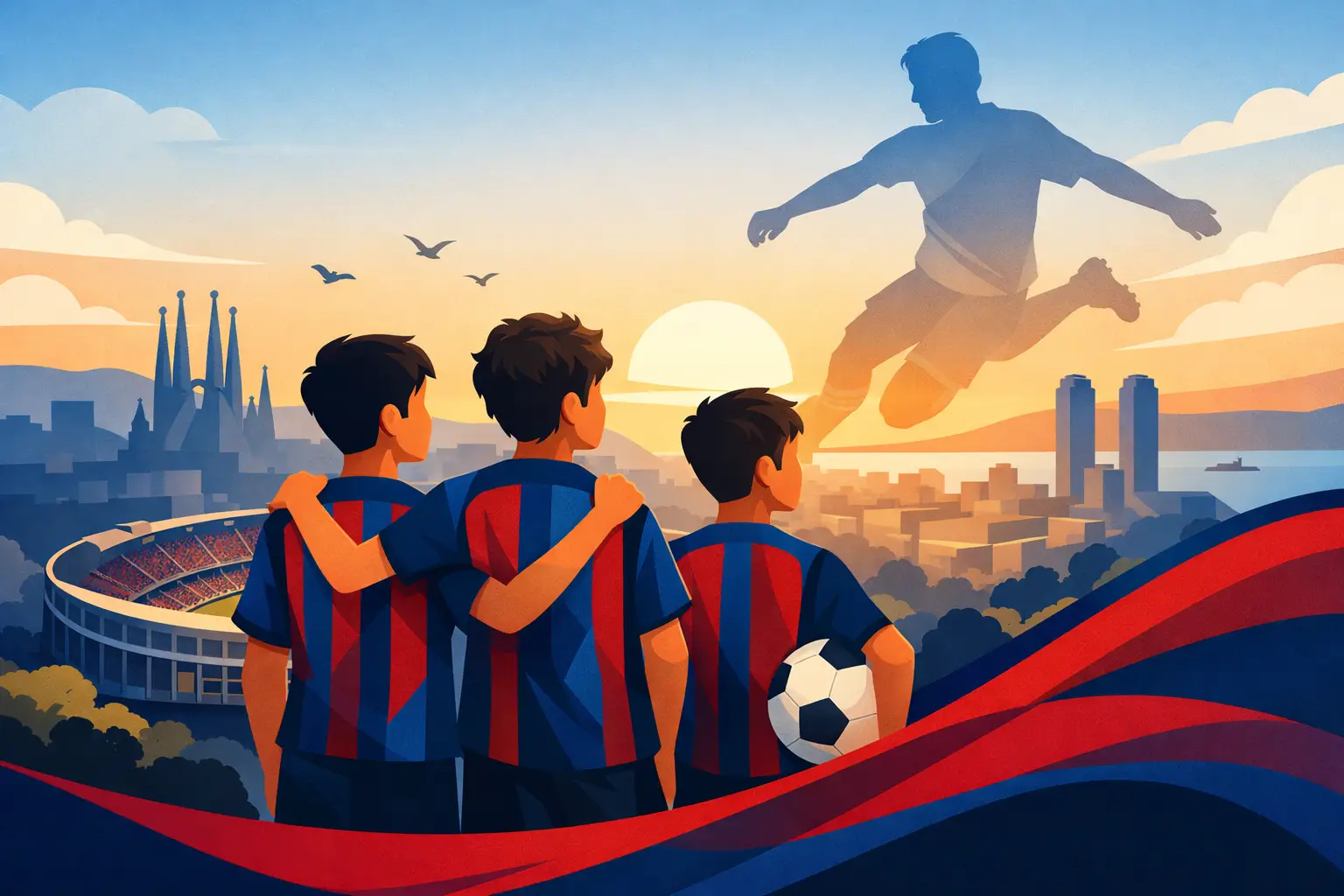
At FC Barcelona, youth is never supposed to be a side story. Barcelona youth are part of the club’s central promise: develop elite footballers, teach them a recognizable idea of the game, and give them a real route to the Camp Nou spotlight. That promise has rarely felt more relevant than it does now.
For years, La Masia was measured against an impossible standard. Any academy class was compared with Lionel Messi, Xavi, Andrés Iniesta, Sergio Busquets, Gerard Piqué, and the generation that made Barça’s football philosophy famous across the world. That was unfair, but it also reflected the weight of the shirt. At Barcelona, a talented 17-year-old is not simply judged on potential. Fans want to know whether he can receive under pressure, understand positional play, compete in El Clásico, and carry the identity of the club.
The current wave has changed the conversation. Lamine Yamal, Pau Cubarsí, Gavi, Alejandro Balde, Fermín López, Marc Casadó, and others have shown that the pathway is not a marketing slogan. It is alive. Still, turning a remarkable group of teenagers into the next great Barça core will require patience, protection, and smart squad planning.
Why Barcelona youth matters beyond the headlines
A breakthrough performance from a young player creates an immediate rush. A teenager scores, assists, or shuts down an established star, and the excitement is understandable. But the importance of academy integration goes much deeper than a viral highlight or a social-media debate over who has the higher ceiling.
Barcelona’s financial reality makes homegrown quality strategically essential. The club cannot approach every transfer window as if it has unlimited room to spend. Registration restrictions, wage management, and the cost of competing for established stars mean La Masia graduates provide something no transfer operation can fully replicate: top-level talent already educated in Barça’s game.
That does not mean youth is free. Academy players need coaching, physical development, medical support, contract renewals, and careful handling when attention arrives early. Yet a player who can step into the first team saves the club from chasing an expensive external solution for every tactical need. When a Cubarsí looks comfortable building from the back or a Casadó gives the midfield structure, Barcelona gain both sporting value and breathing room.
There is also a cultural factor. Barça supporters do not demand an all-academy XI every weekend. They know the club needs experienced leaders and elite signings. But there is a different energy when a player who grew up in the system understands what a Champions League night, a match against Real Madrid, or a difficult away trip in LaLiga means to the badge.
The Barcelona youth pathway is not just about talent
La Masia’s reputation is often reduced to technique. The image is familiar: small, gifted players passing sharply through midfield and moving intelligently between lines. Technique matters, of course, but the academy’s real value is its football education.
From a young age, players are taught to interpret space, offer passing angles, press collectively, and make decisions before the ball reaches them. That is why some graduates can look unusually composed on debut. They may be physically younger than their opponents, but the patterns are familiar. The language of the game has been drilled into them for years.
Cubarsí is a sharp example. Center backs normally need time to learn the demands of senior football, especially at a club where defenders are expected to defend wide spaces and initiate attacks. Yet his calm distribution and reading of danger made him look suited to Barça’s demands quickly. The challenge now is not discovering whether he is talented. It is managing his minutes across a long season while helping him improve the less glamorous details of defending.
Lamine Yamal presents a different challenge. His ability can decide matches right now, which makes it difficult to keep expectations sensible. He has the left foot, imagination, bravery, and close control of a natural difference-maker. But even generational attackers need recovery, tactical variation, and the freedom to develop without being asked to solve every problem in every match.
That balance is where the club’s coaching staff, sporting department, and senior dressing room become decisive.
Not every prospect needs the same route
One of the biggest mistakes around academy players is treating development as a straight line. A strong debut does not guarantee permanent first-team status. A quiet season does not mean a prospect has failed. Some players need a loan. Some need another year with Barça Atlètic. Some need a specific role in the senior squad before they can earn more responsibility.
Fermín’s rise is a reminder that progress can arrive through an unconventional route. His loan spell at Linares gave him competitive experience and maturity that training alone could not provide. When he returned, he brought energy, late runs into the box, and a willingness to shoot that added a different profile to Barcelona’s midfield.
Gavi’s case shows the other side. He arrived so forcefully that he became essential almost immediately. His intensity, courage, and appetite for duels made him impossible to ignore. But his early workload also underlined a hard truth: enthusiasm should never become an excuse to overuse a young player.
The right route depends on position, body type, mentality, and the state of the squad. A goalkeeper may need years. A winger can explode at 16. A midfielder might be technically ready but need more physical strength. Barcelona must evaluate the player, not force every player into the same story.
The danger of turning promise into pressure
The global spotlight on FC Barcelona magnifies everything. A young player can go from a standout in youth football to the subject of daily transfer rumors, contract reports, and comparisons with club legends in a matter of months. For supporters, the instinct is often to celebrate loudly. For the club, the responsibility is to create guardrails.
Contract renewals are crucial. If Barcelona identify a player as a major part of the project, uncertainty around his future only invites noise and pressure. Clear plans matter as much as release clauses. Young players and their families need to see a credible sporting pathway, not just hear that they are valued.
Squad construction matters too. A youth-heavy team can be thrilling, but it needs experienced players who organize difficult moments. Pedri, Frenkie de Jong, Ronald Araújo, and other senior figures have their own roles to play in setting standards. Young talent develops best in an environment where it is allowed to make mistakes without carrying the full burden of fixing them.
Supporters have a role as well. Barça fans are right to be excited by this generation, especially after years when financial strain and on-pitch inconsistency made the future feel uncertain. But the next poor performance should not become a verdict. Development is messy. Even the greatest academy graduates had stretches where their place was questioned.
What comes next for Barcelona youth
The real test is sustainability. Barcelona have already proven they can produce exceptional players. The next task is making sure the first team remains a destination where those players can grow together, compete for major trophies, and avoid being pushed aside by short-term panic buys.
That requires a clear sporting model. Signings should complement La Masia, not block it. If a world-class addition raises the level and gives a prospect a mentor, the move can make perfect sense. If an expensive arrival closes the door on a ready-made academy solution, Barcelona must be certain the upgrade is genuine.
The women’s and basketball sections also reinforce the wider identity of the club: youth development is not a nostalgic slogan reserved for one team. It is part of how Barça sees itself, from training-ground work to elite competition.
For now, the message around this generation should be confident but measured. Lamine Yamal does not need to be Messi. Cubarsí does not need to be Piqué. Gavi does not need to be a new version of anyone. Their opportunity is to write their own chapter, with the Barça idea in their feet and enough time to make it last.
The best way to watch them is not to demand the next golden generation overnight. Watch the details: who asks for the ball under pressure, who learns after a bad match, who keeps improving when the headlines move elsewhere. That is where Barcelona’s future usually begins.

Discover more from Barça Buzz
Subscribe to get the latest posts sent to your email.