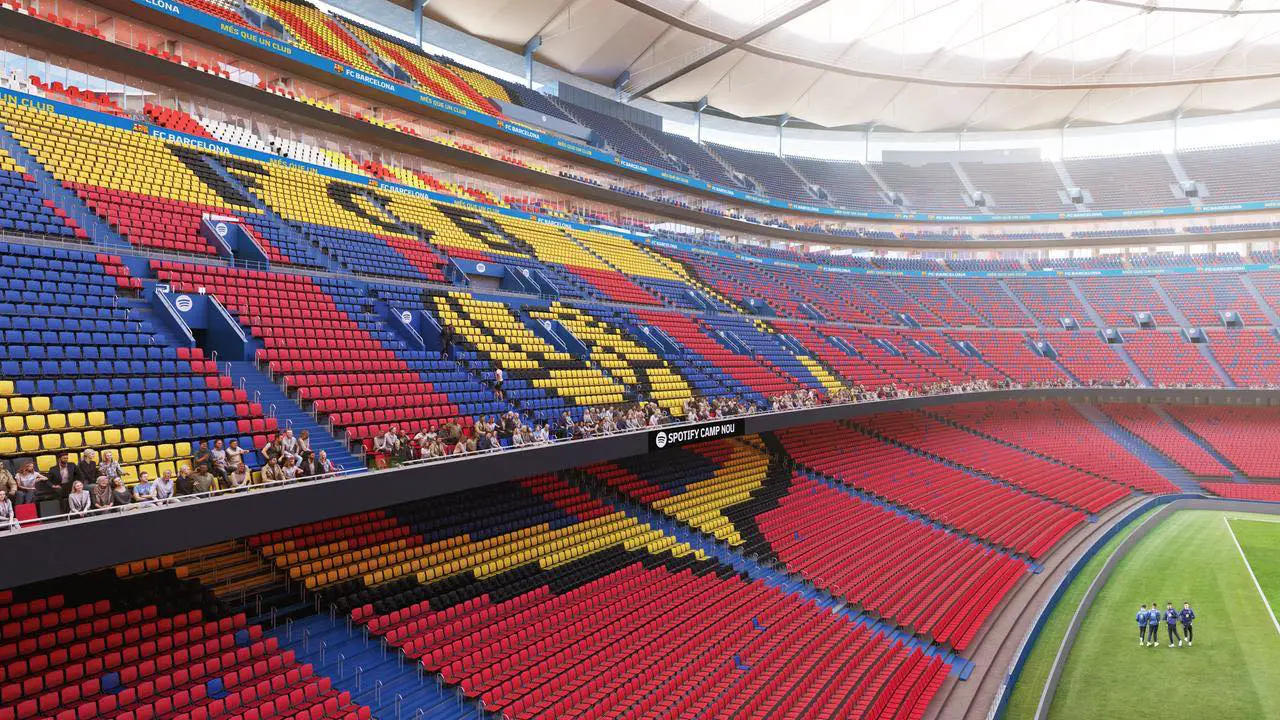
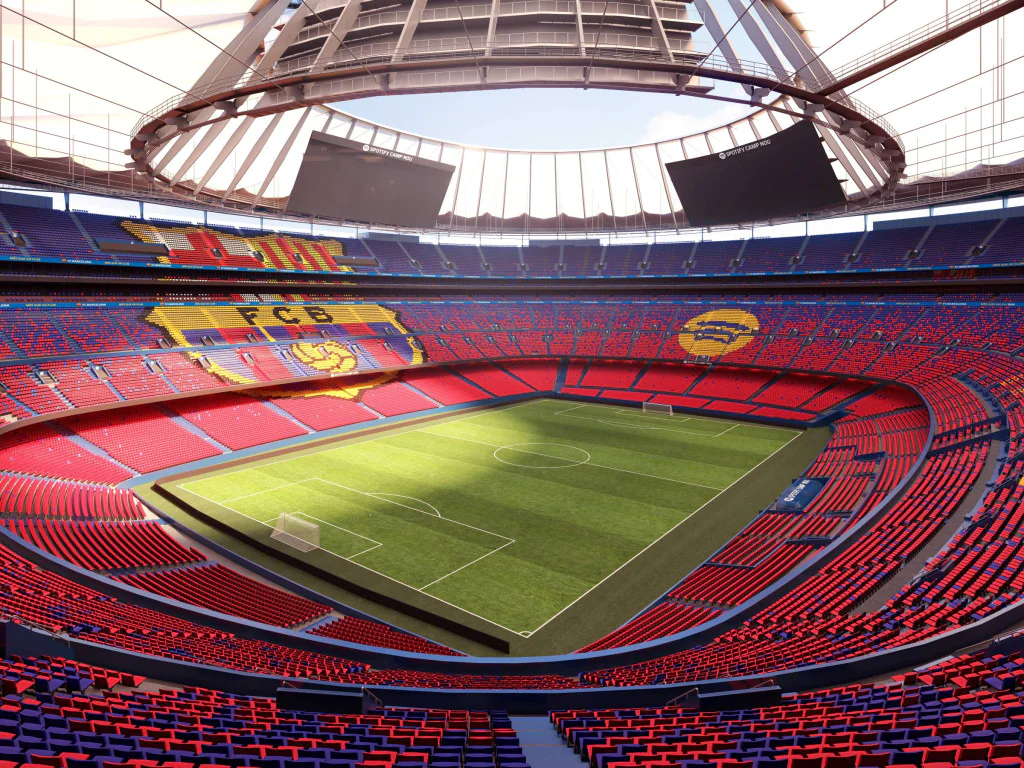
FC Barcelona is undertaking one of the most ambitious financial projects in its history with the construction of the new Spotify Camp Nou. The stadium renovation is part of the wider transformation plan known as Espai Barça.
This project is not only designed to modernize the club’s facilities but also to transform the stadium into a financial powerhouse capable of generating revenue all year round.
For decades, Camp Nou has already been one of the club’s main sources of income. However, the new stadium model aims to significantly increase that impact through new commercial areas, VIP experiences and event spaces.
The board believes this infrastructure will be key to consolidating Barcelona’s financial stability in the coming years.
An investment of more than €1.4 billion
The complete Espai Barça project has an estimated cost of between €1.45 and €1.5 billion, making it the largest infrastructure investment in the club’s history.
Most of that budget is allocated to the renovation of Spotify Camp Nou itself, which represents approximately €900 million to €1.07 billion of the total investment.
The remaining funds will go toward other developments within the complex, including the construction of a new Palau Blaugrana, new offices, commercial areas and urban improvements around the stadium.
The project also focuses on improving the visitor experience with new restaurants, entertainment spaces and services designed to attract visitors throughout the entire year.
Between €250 and €400 million in annual revenue
The financial objective of the new stadium is to significantly increase matchday revenue and the commercial exploitation of the venue.
Internal projections from the club and various analysts suggest that the new Camp Nou could generate between €250 million and €400 million per year once the project is fully completed.
Before the renovation, stadium-related income was around €150 million annually.
This means the new stadium could potentially double or even triple the revenue Barcelona previously generated from its main physical asset.
More than 9,000 VIP seats
One of the biggest sources of income will come from premium hospitality areas.
The new Camp Nou will feature more than 9,000 VIP seats, a significant increase compared to the previous stadium configuration.
These premium tickets include exclusive services such as private lounges, high-end restaurants, personalized experiences and priority access to the stadium.
In many of Europe’s top stadiums, hospitality packages represent a large portion of total revenue because companies and sponsors are willing to pay high prices for these experiences.
For Barcelona, the hospitality business alone could generate over €100 million per year.
A stadium designed to operate year-round
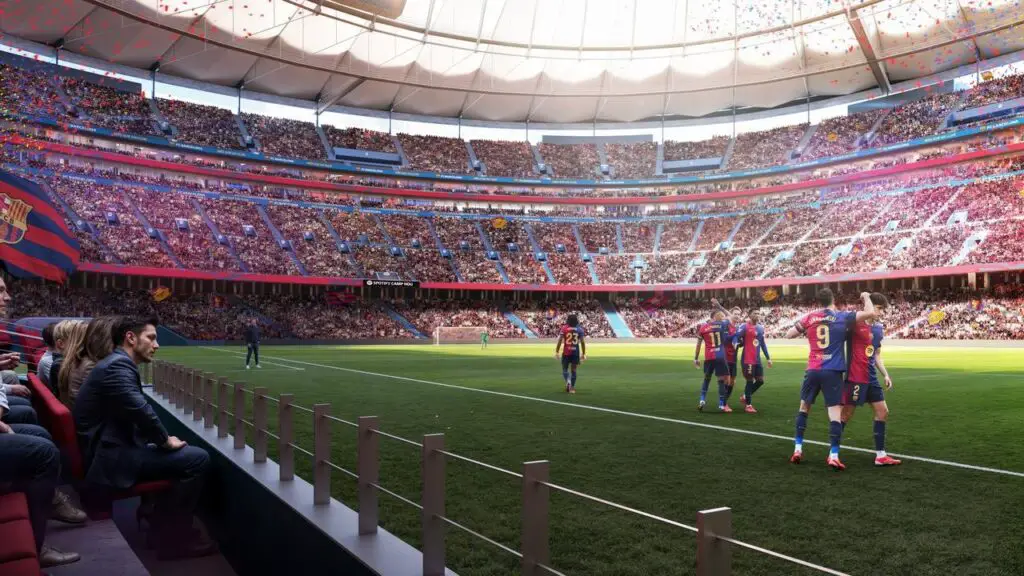
Another key aspect of the project is turning the stadium into an active venue throughout the entire year, not just on matchdays.
The new Camp Nou will be equipped to host concerts, conferences, corporate events and cultural activities.
In addition, the club’s museum will remain one of Barcelona’s biggest tourist attractions, welcoming millions of visitors every season.
The combination of tourism, events and commercial activities will allow the stadium to generate income even when no football matches are being played.
A strategic project for Barça’s future
The Espai Barça project represents a major strategic investment in the club’s long-term future.
In modern football, the biggest European clubs increasingly depend on the commercial exploitation of their stadiums to compete financially with rivals.
With the transformation of Spotify Camp Nou, Barcelona aims to place itself alongside other elite European stadiums that already generate hundreds of millions of euros every season.
If projections are fulfilled, the new stadium will not only be one of the largest in the world, but also one of the most powerful economic assets in European football.

Discover more from Barça Buzz
Subscribe to get the latest posts sent to your email.